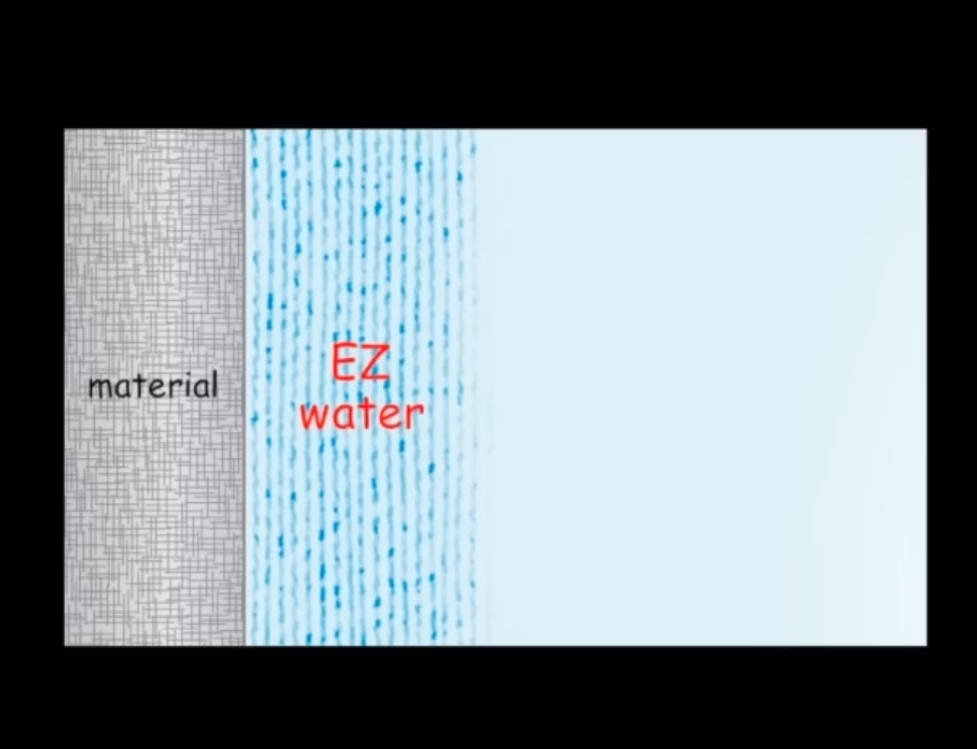
While everyone knows of the three states of water, there exists a fourth phase of water that holds interesting biological properties especially within our bodies. This fourth phase of water goes by many names, EZ (Exclusion zone) water, structured water, gel-like water.
The water molecules in structured water are arranged in an organized formation, while the water is still in a liquid consistency, a liquid crystal. The best way to visualize the physical form is Jell-O. The water molecules are arranged in a hexagonal lattice configuration, giving rise to the chemical formula of H302 and expelling a proton. Therefore, the hexagonal lattice becomes negatively charged.
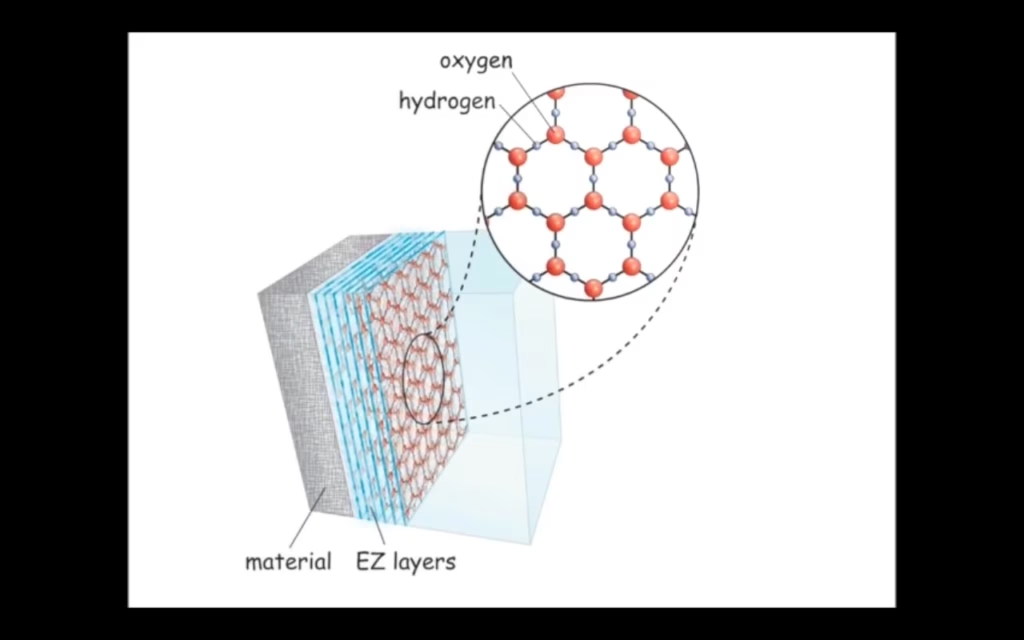
Gerald Pollack is often credited for the discovery of 4th phase water or as he likes to call it, EZ water. He has done seminal work studying 4th phase water in his lab at University of Washington, Seattle.
But what does this have to do with us?
It is also rather common knowledge that the human body is composed of upwards of 70% water, but what phase is that water in? It certainly isn’t steam or ice. Most people would say the water in our bodies is just plain water (bulk).
Recall that EZ water forms along hydrophilic surfaces. It just so happens generally any biologic tissue or protein is hydrophilic in nature.
Pollack suggests that 70-90% of the water in the body is actually EZ water.
Ok, we have EZ water in our bodies, so what?
Blood circulation
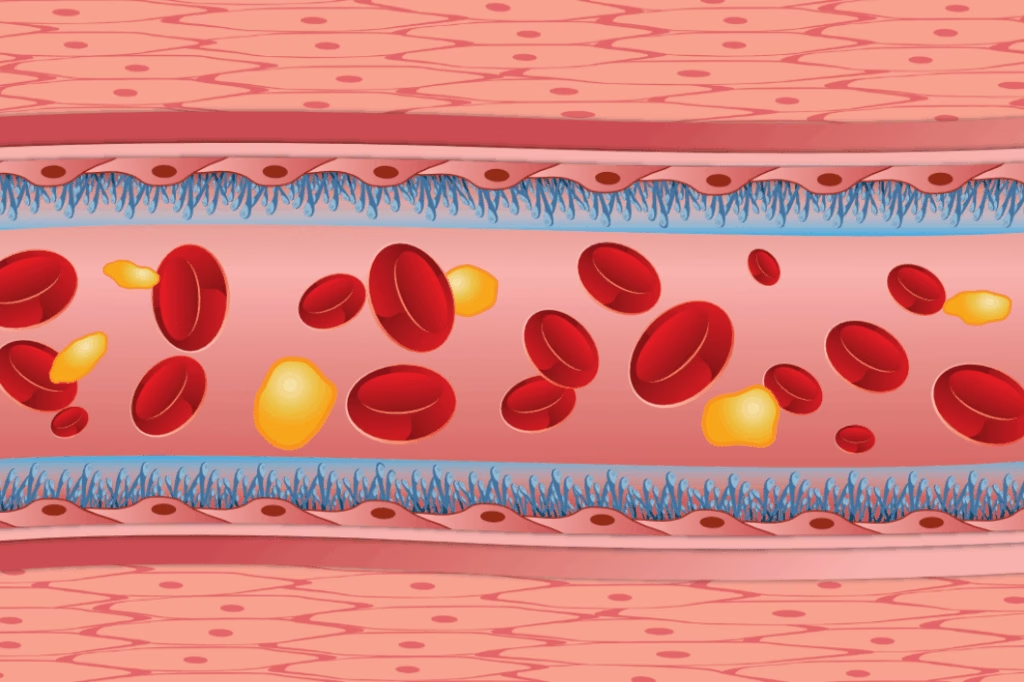
A special property of this structured water is that it provides a driving force for blood circulation. As the negative charge builds along the blood vessel walls, protons accumulate in the bulk water near the center of a tube, creating a proton gradient. Additionally, the negatively charged particles in our blood are subject to a repelling force from each other and the EZ. Much like a maglev train in Japan, the contents of our blood are meant to glide along through the circulation. We can see this effect through experiments done on chick embryos and in trees. Notably, light can increase the speed of this flow by up to 5x.(1)
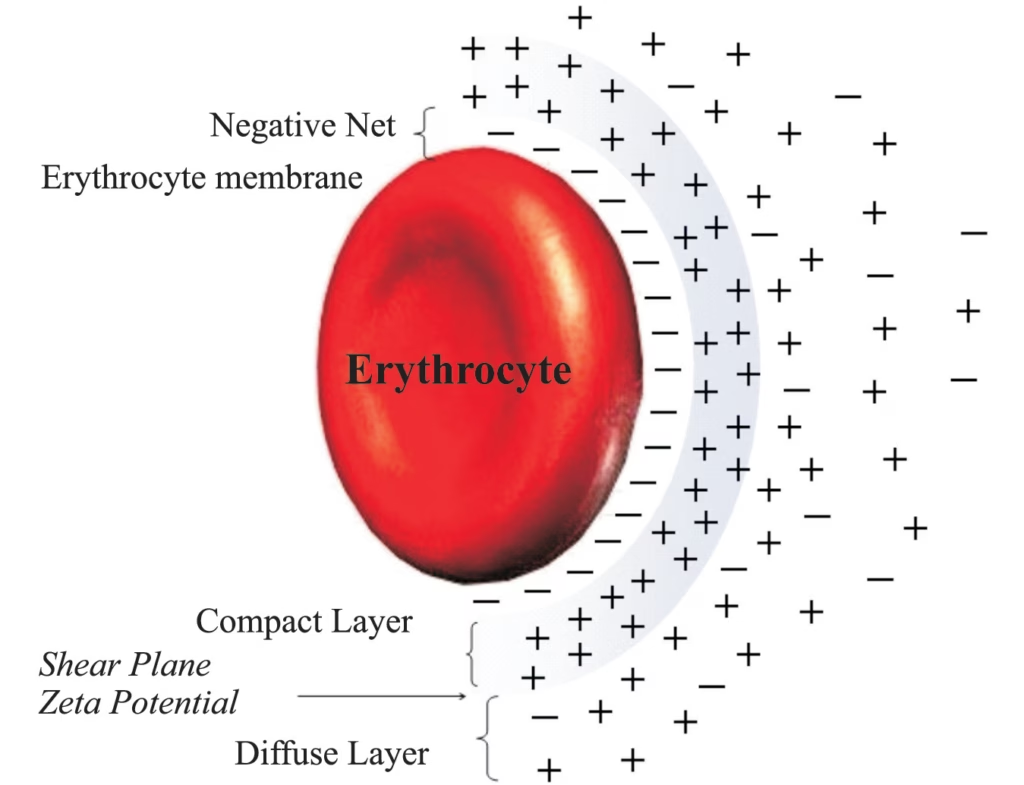
The tie in to our health here is when we deplete that negative charge, the contents of the blood do not repel, and in fact start clumping together and becomes increasingly stickier. With the increased viscosity, the body has to compensate with higher pressures to maintain the same flow. This, is what I would highlight as the main culprit behind “essential hypertension”. Moreso, with the loss of the negative charge barrier along the blood vessel wall, contents of the blood start to collide with the vessel wall, making it prone to oxidation and damage. Accumulation of insults to the vessel wall eventually leads to plaque formation after blood clots repeatedly form in response to the damage.
Cellular work
The negative charge from EZ water also exists within cells, surrounding proteins. The negative charge allows for proteins to shift between configurations and perform work. If EZ water is for whatever reason depleted, then the proteins lose folding efficiency and the cell is unable to perform as much work as it normally would.
Water battery
As there exists a negative charge within the EZ water and a corresponding positive charge in the adjacent bulk water, with the two separate charges we have a literal water battery.
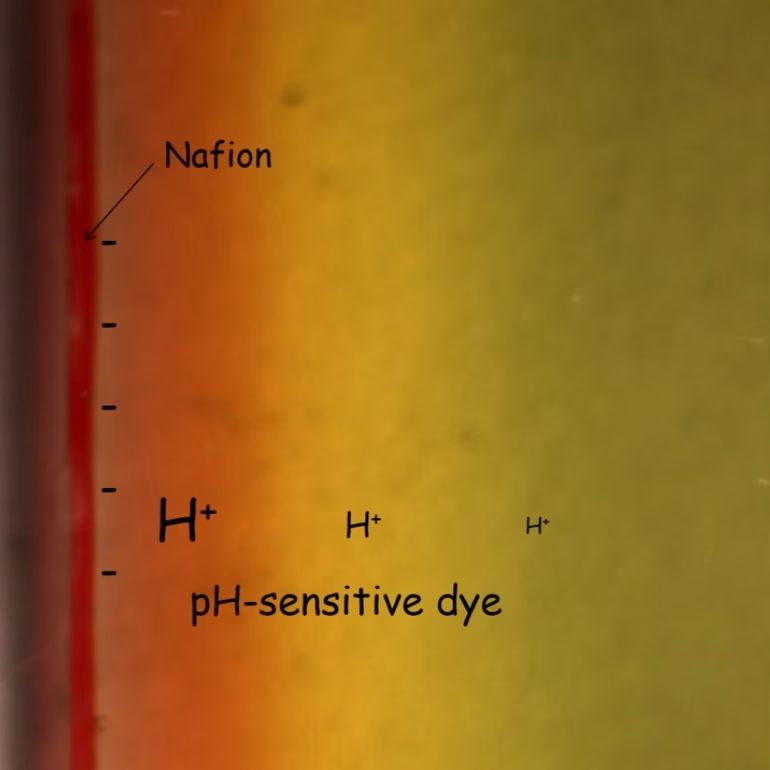
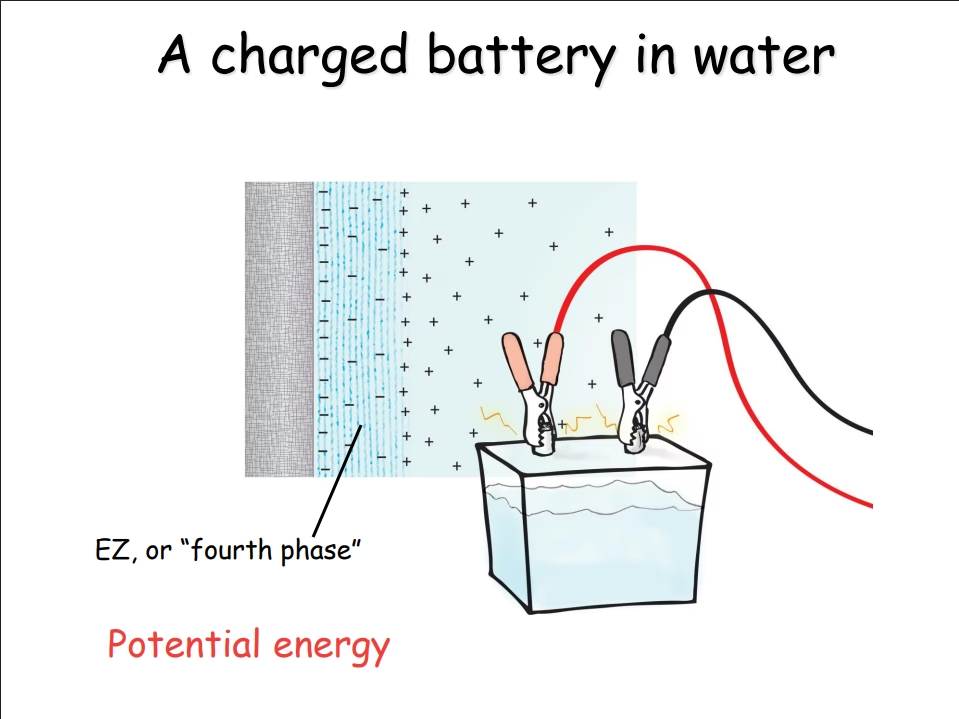
So the water in our bodies effectively store energy. It is this energy that the body draws upon to perform the processes of daily life. When this energy runs low, that is when things go awry and we develop disease.
Watch to 1:18:10
Well then, how do we charge our water batteries? It turns out structured water is potentiated by infrared light. As light is absorbed by the water, layers of structured water build up against a hydrophilic surface and extends the exclusion zone.
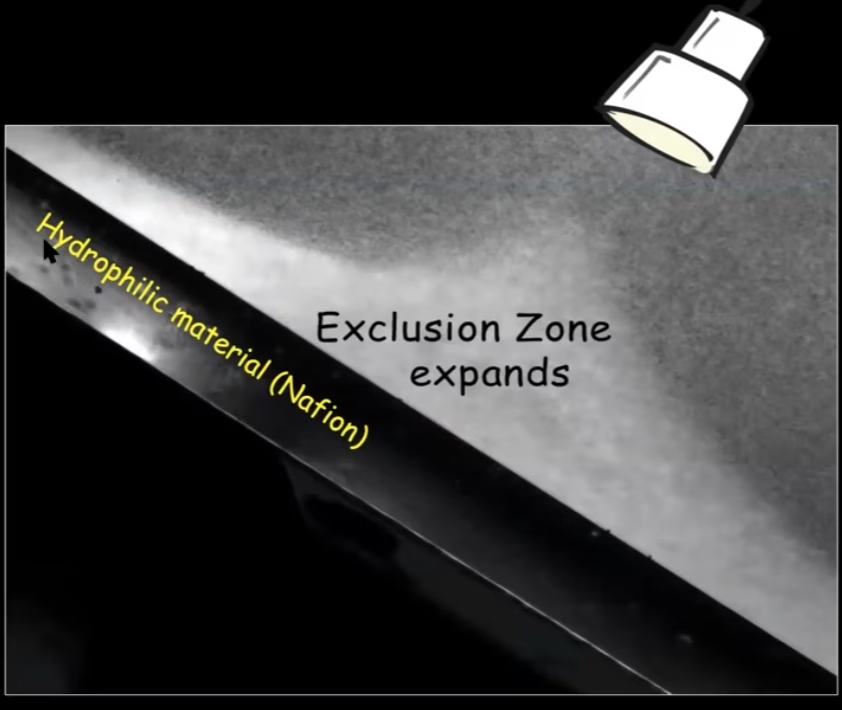
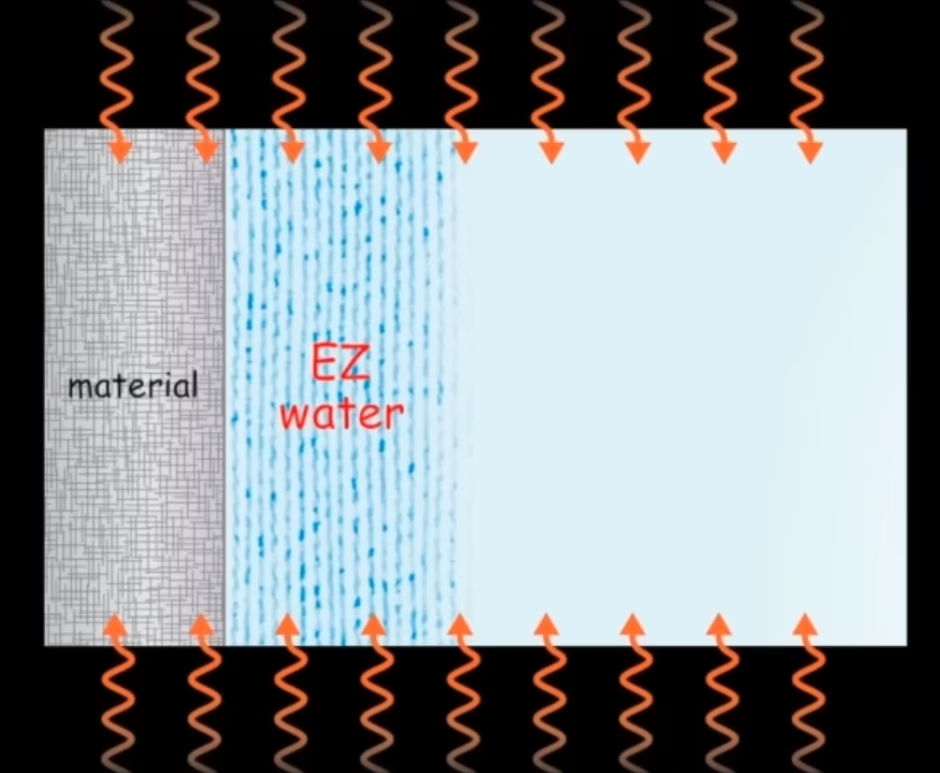
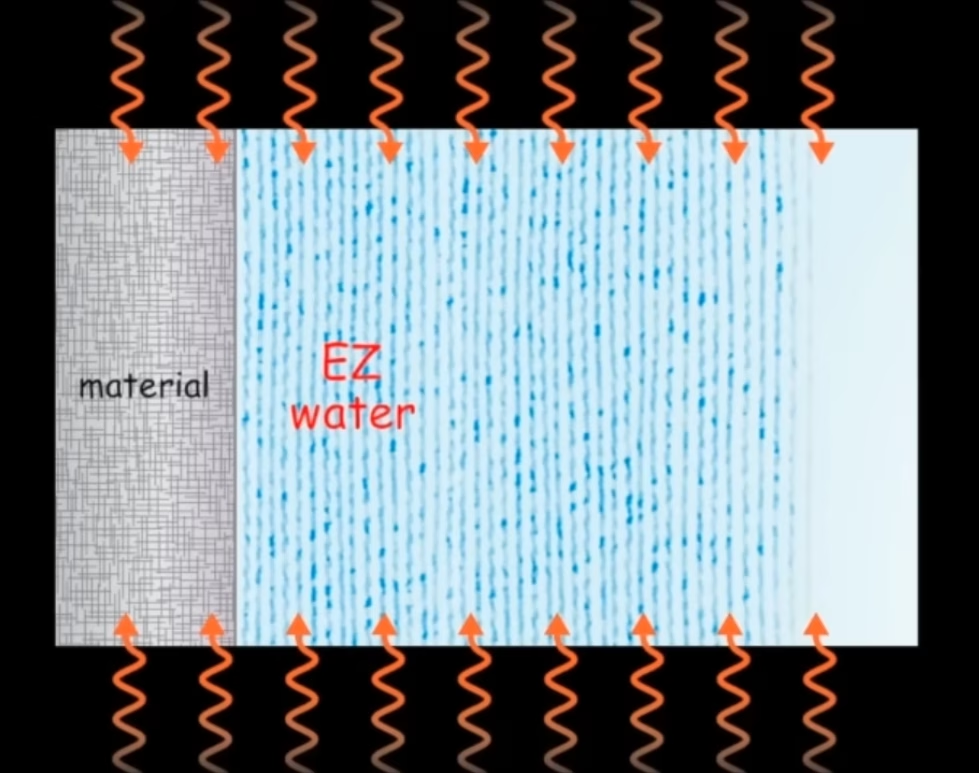
Additionally, grounding and connecting yourself to the massive reservoir of negative charge from the Earth also helps to expand the EZ.
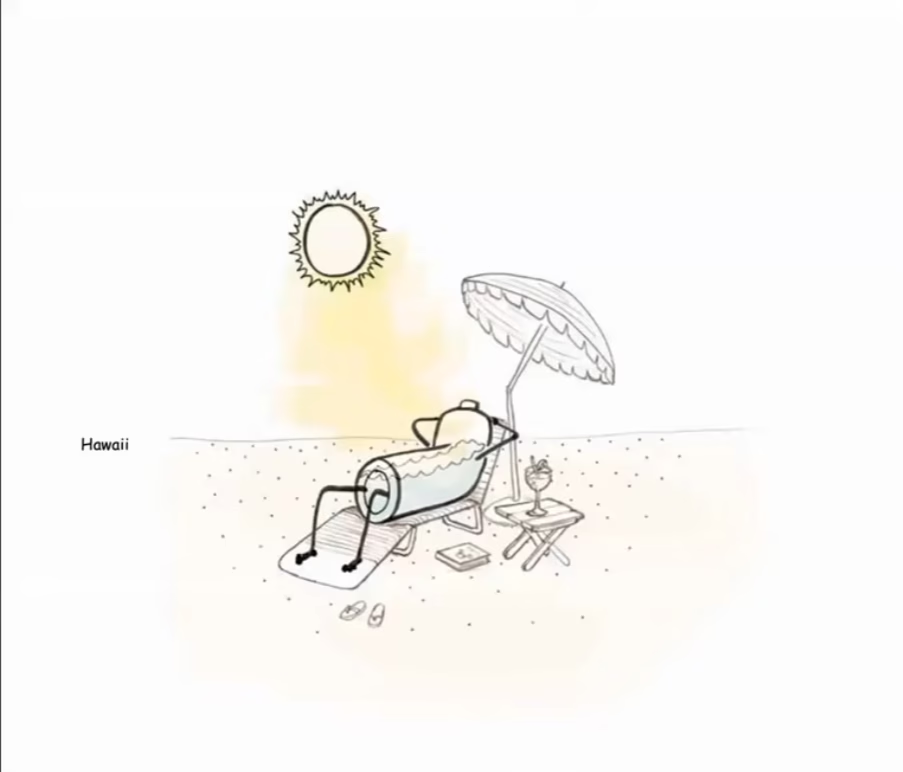
So an easy way to charge our water batteries is to go to the beach to ground to the earth and soak up sunlight at the same time.
While you can potentiate structured water, you can disrupt it as well. Factors such as high blood sugar, smoking, stress, or nnEMFs like Wi-Fi interrupt the structure and depletes the negative charge. In a study by Pollack, he demonstrates that Wi-Fi disrupts EZ water formation by 15-20%.(2)
So as you can imagine, in our modern lifestyles, where we spend 90+% of our days indoors, eating processed foods, being overworked and stressed, in Wi-Fi 24/7, it’s not any wonder our EZ water is depleted.
Conclusion
The 4th phase water in our bodies are fundamental to the health. It serves as a literal battery for the energy we derive from our environment. It drives the circulation of our blood through the vessels. It provides energy for the proteins and cells to do the work of life. When we are exposed to factors that deplete our structured water, we lose energy and cells start to malfunction, leading to disease. To maintain our structured water we need to maintain proper sunlight exposure, grounding, and diet. To avoid depleting our structured water we also need to avoid nnEMFs, high blood sugars, and stress. This short post barely begins to scratch the surface of what structured water’s role is in our health. The science on 4th phase water is still relatively new and we are still learning more.
Media
The Fourth Phase of Water – Gerald Pollack
Cells, gels, and the engines of life – Gerald Pollack
The Fourth Phase of Water: Dr. Gerald Pollack at TEDxGuelphU
Gerald Pollack: Electrically Structured Water | EU2013
References
- Rohani, M., & Pollack, G. H. (2013). Flow through horizontal tubes submerged in water in the absence of a pressure gradient: Mechanistic considerations. Langmuir, 29(22), 6556–6561. https://doi.org/10.1021/la4001945
- Lee, J. W., & Pollack, G. (2021). Impact of Wi-Fi Energy on EZ Water. https://doi.org/10.14293/s2199-1006.1.sor-.ppiq9g6.v1
Sulfate’s Critical Role for Maintaining Exclusion Zone Water: Dietary Factors Leading to Defciencies